Navigating India's CCTS 2026: Guide for Obligated Entities
Who is obligated under CCTS, the compliance route from baseline to Form A, and three moves for the C-suite this quarter.
India's Carbon Credit Trading Scheme (CCTS) is now a legally binding compliance mechanism run by the Bureau of Energy Efficiency (BEE), with targets notified by MoEFCC.
Who Is Obligated
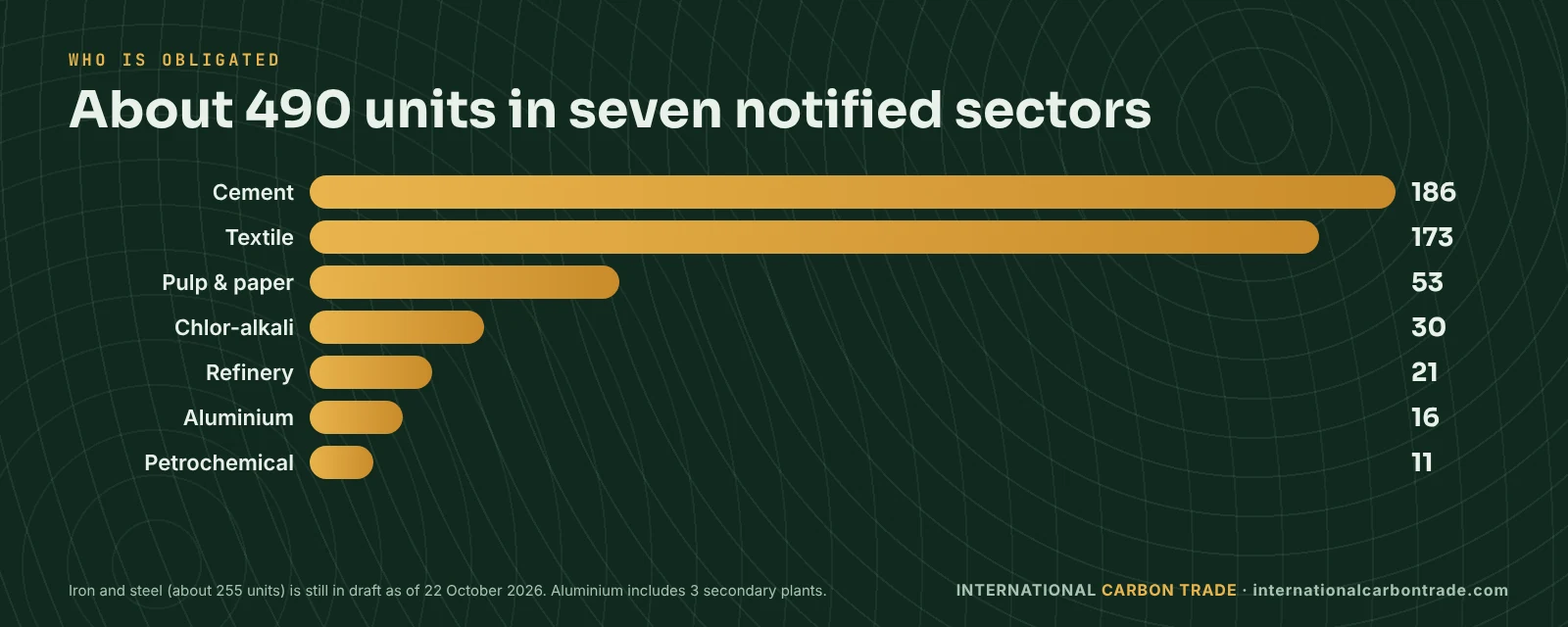
Cement, chlor-alkali, aluminium, pulp and paper, refining, petrochemicals and textiles now carry greenhouse gas emission intensity (GEI) targets. Iron and steel is still in draft as of 22 October 2026. The full list is in our January 2026 Gazette explainer.
The Compliance Route
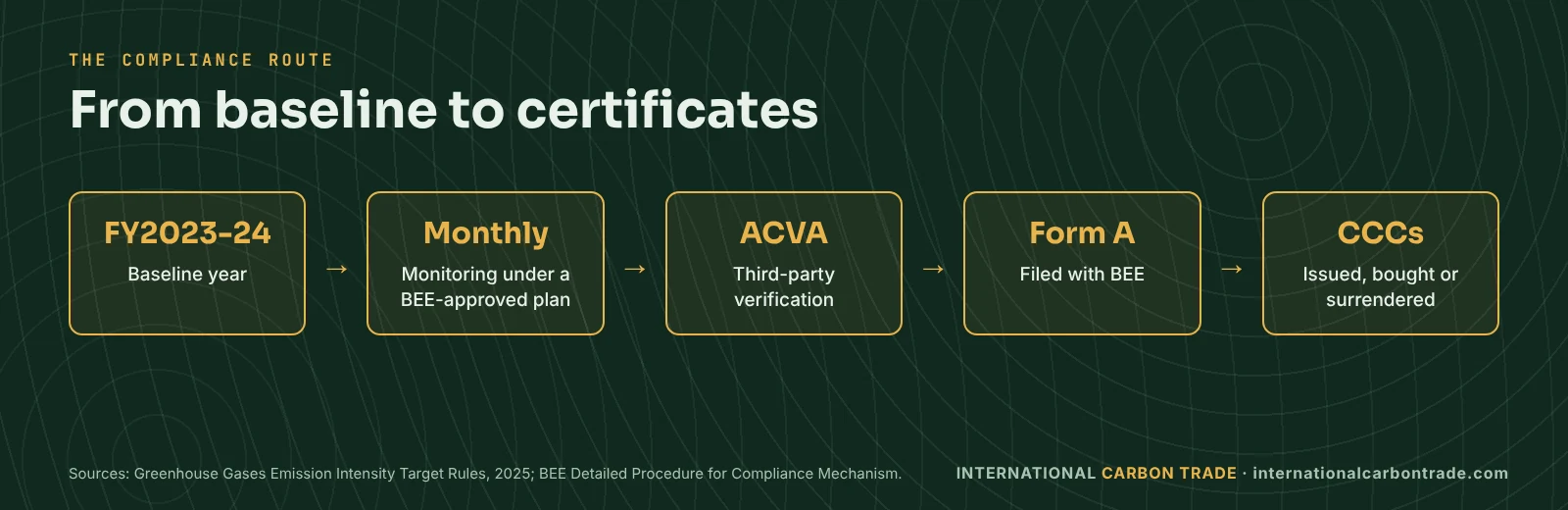
- Baseline: FY 2023–24 intensity, with pro-rata FY 2025–26 targets for sectors notified mid-cycle (Note 3).
- Monitoring: monthly fuel, power and production data under a BEE-approved plan. Default emission factors give way to plant-specific ones: see Type I vs Type II.
- Verification: an accredited verifier (ACVA) signs off the GHG report before you file Form A.
- Credits: beat your target and you receive CCCs; hitting it exactly earns none (see why).
Every correction must leave an audit trail, which is why spreadsheets are giving way to digital MRV (dMRV).
Three Moves for the C-Suite
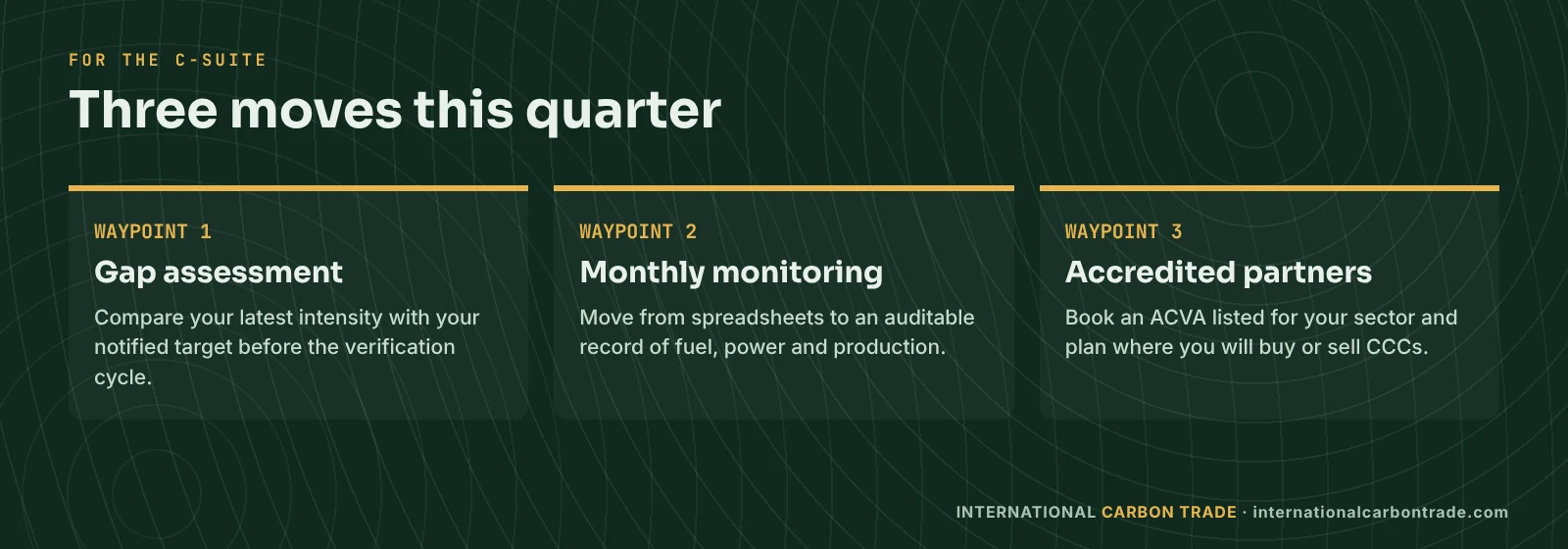
1. Gap assessment: compare your latest intensity with your target before the verification cycle.
2. Plan your CCC position: shortfall units buy only on IEX, PXIL and HPX, and the first trade is still pending.
3. Engage accredited partners: book a verifier listed by BEE for your sector.
ICT helps obligated entities across all three steps: target gap and penalty analysis, a dMRV platform for monthly data, ACVA selection, and CCC trading support.
Free gap assessment: email your Gazette code to contact@internationalcarbontrade.com, and we'll compare your latest intensity with your target.
Keep Reading
- Carbon Credit Certificate (CCC) in India: Complete CCTS Guide
- Type I vs Type II Emission Factors: The CCTS Deadline in April 2027
- The January 2026 CCTS Gazette, Explained
Our CCTS Services
International Carbon Trade (ICT) is an India-based CCTS marketplace and dMRV platform offering 18 end-to-end services, from BEE ICM Portal registration and ACVA verification to buying, selling and banking CCCs on India's power exchanges.
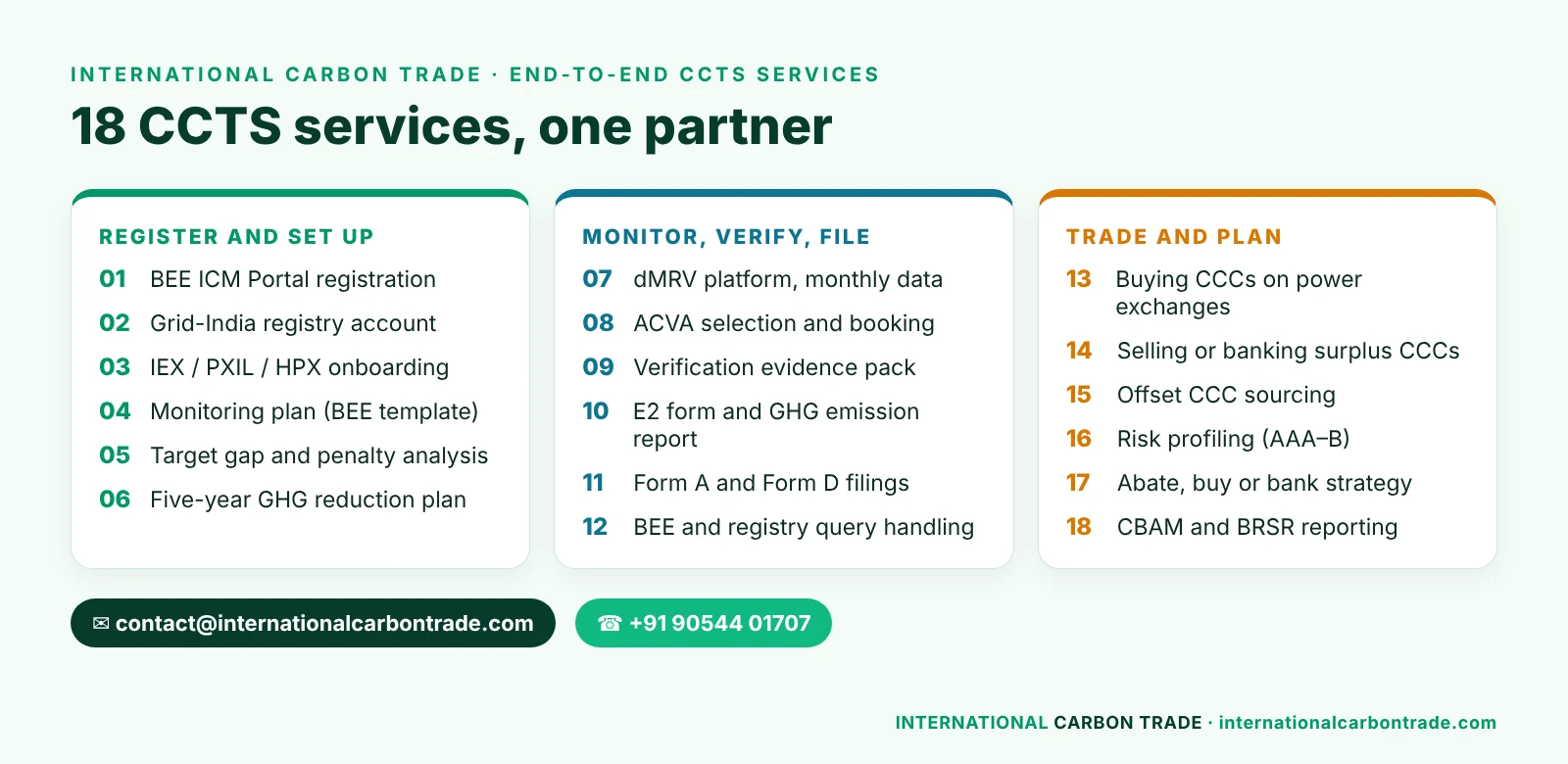
| Register and Set Up | Monitor, Verify, File | Trade and Plan |
|---|---|---|
| BEE ICM Portal registration | dMRV platform, monthly data | Buying CCCs on power exchanges |
| Grid-India registry account | ACVA selection and booking | Selling or banking surplus CCCs |
| IEX / PXIL / HPX onboarding | Verification evidence pack | Offset CCC sourcing |
| Monitoring plan (BEE template) | E2 form and GHG emission report | Risk profiling (AAA–B) |
| Target gap and penalty analysis | Form A and Form D filings | Abate, buy or bank strategy |
| Five-year GHG reduction plan | BEE and registry query handling | CBAM and BRSR reporting |
For any services related to CCTS, contact International Carbon Trade:
- Email: contact@internationalcarbontrade.com
- Phone: +91 90544 01707
- Website: internationalcarbontrade.com
- LinkedIn: Follow International Carbon Trade
Frequently Asked Questions
- Who administers India's CCTS?
- The Bureau of Energy Efficiency administers the Carbon Credit Trading Scheme, with targets notified by the Ministry of Environment, Forest and Climate Change.
- What is the baseline year for CCTS targets?
- FY 2023-24 is the baseline year, with compliance years FY 2025-26 and FY 2026-27.
- Who verifies an obligated entity's emissions?
- An Accredited Carbon Verification Agency empanelled by BEE verifies the GHG report before Carbon Credit Certificates are issued.
- What should C-suite leaders do first for CCTS?
- Run a gap assessment against your notified target, put monthly monitoring in place and engage a sector-accredited verifier early.
- How can ICT help obligated entities?
- International Carbon Trade offers 18 CCTS services, from ICM Portal registration and dMRV to ACVA matching and CCC trading. Contact contact@internationalcarbontrade.com or +91 90544 01707.