dMRV for CCTS: What Verification-Ready Data Looks Like
Under CCTS, a credit is only as good as the data behind it. The layers of a verification-ready dMRV record, from meter to registry.
Under the Carbon Credit Trading Scheme, a CCC is the end of a data trail. If the trail breaks, the credit doesn't exist. That is why dMRV (digital monitoring, reporting and verification) is the product, not a feature.
Anatomy of a Verified Tonne
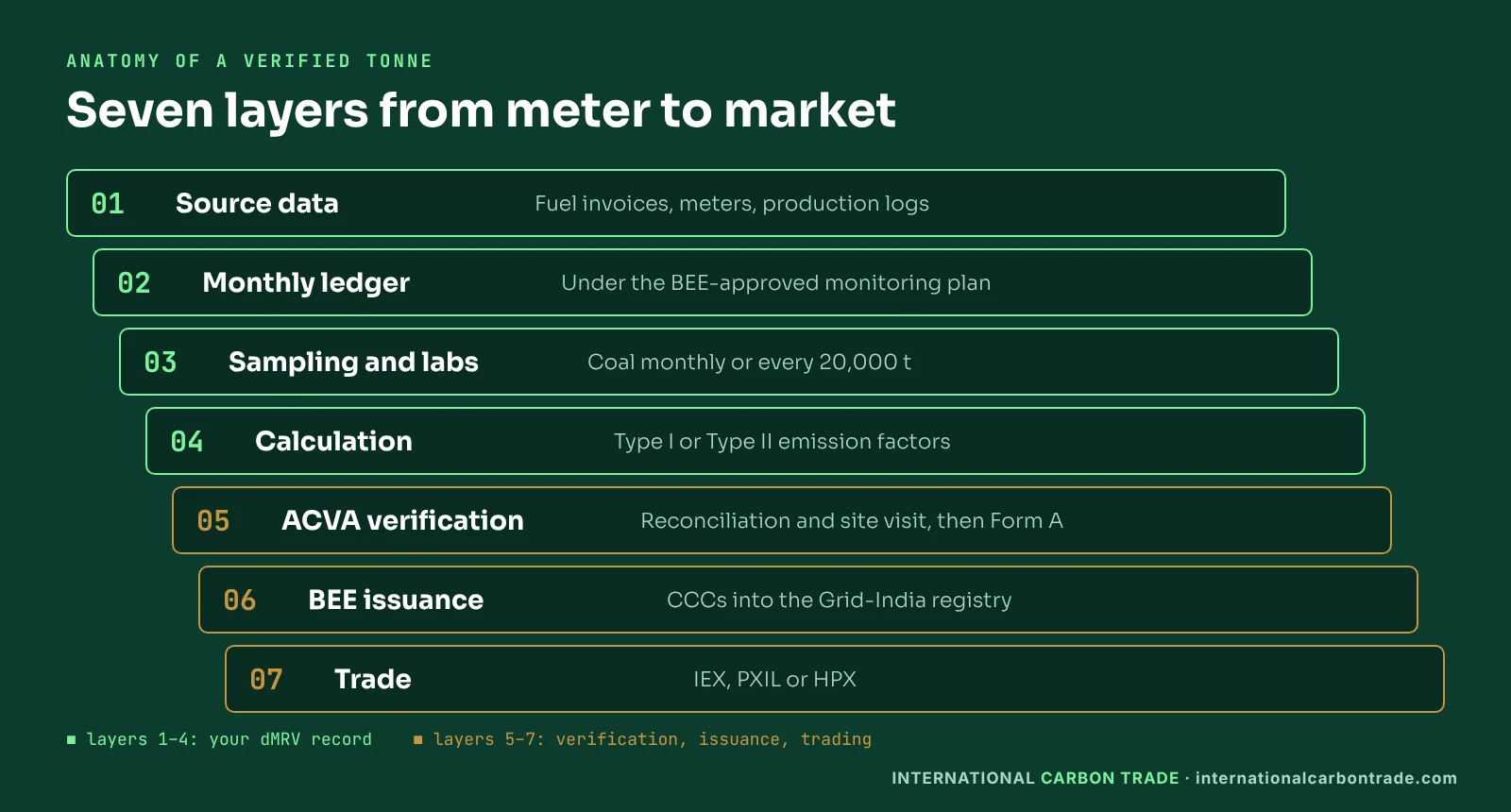
1. Source data: fuel invoices, meter readings, production logs.
2. Monthly ledger under the BEE-approved monitoring plan, due within three months of the cycle's start.
3. Sampling and lab results: coal at least monthly or every 20,000 tonnes.
4. Calculation with Type I or Type II emission factors.
5. ACVA verification, then Form A (the seven steps).
6. BEE assessment and issuance into the Grid-India registry.
7. Trading on IEX, PXIL or HPX.
What a Verifier Will Check
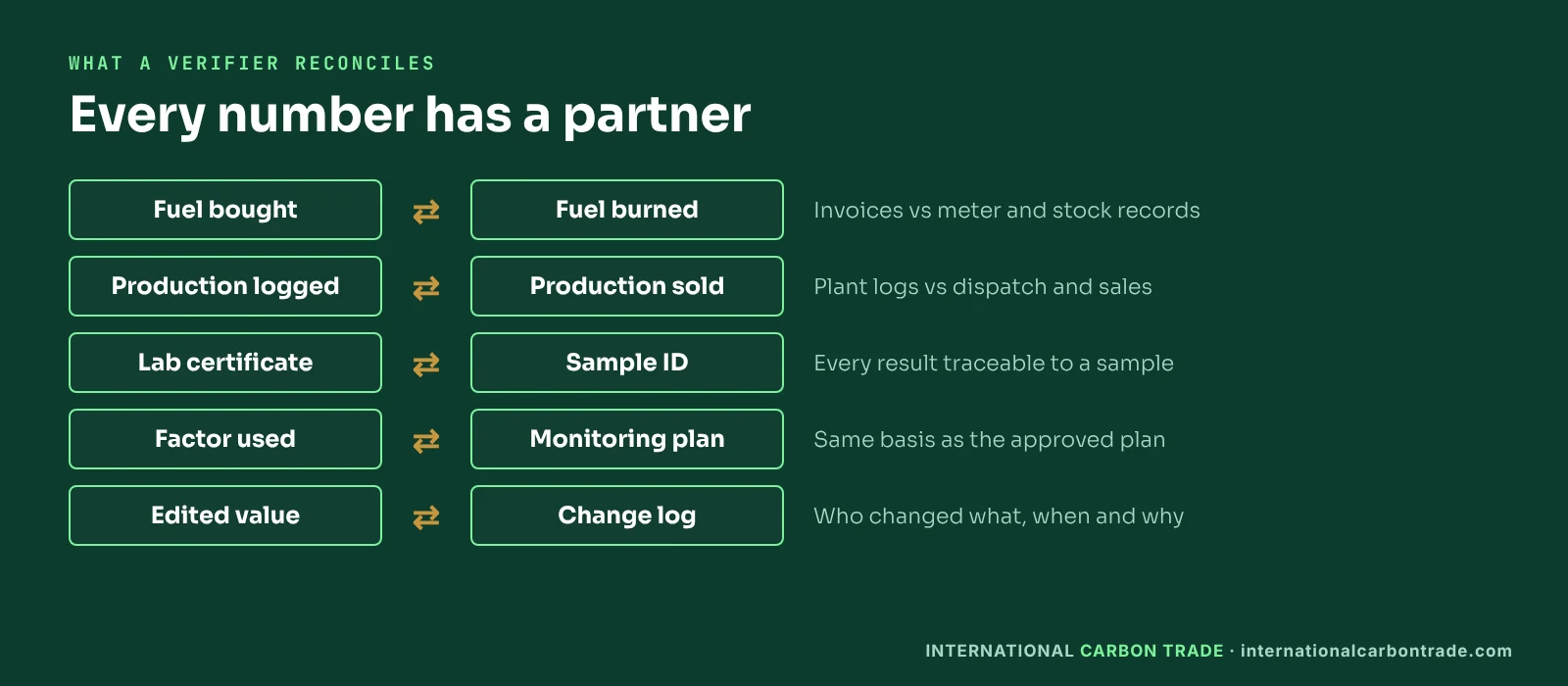
Verifiers reconcile one source against another: fuel bought against fuel burned, production logged against production sold, lab certificates against sample IDs. A spreadsheet with no change history makes that slow; a system that logs every edit makes it routine.
Where Records Usually Break
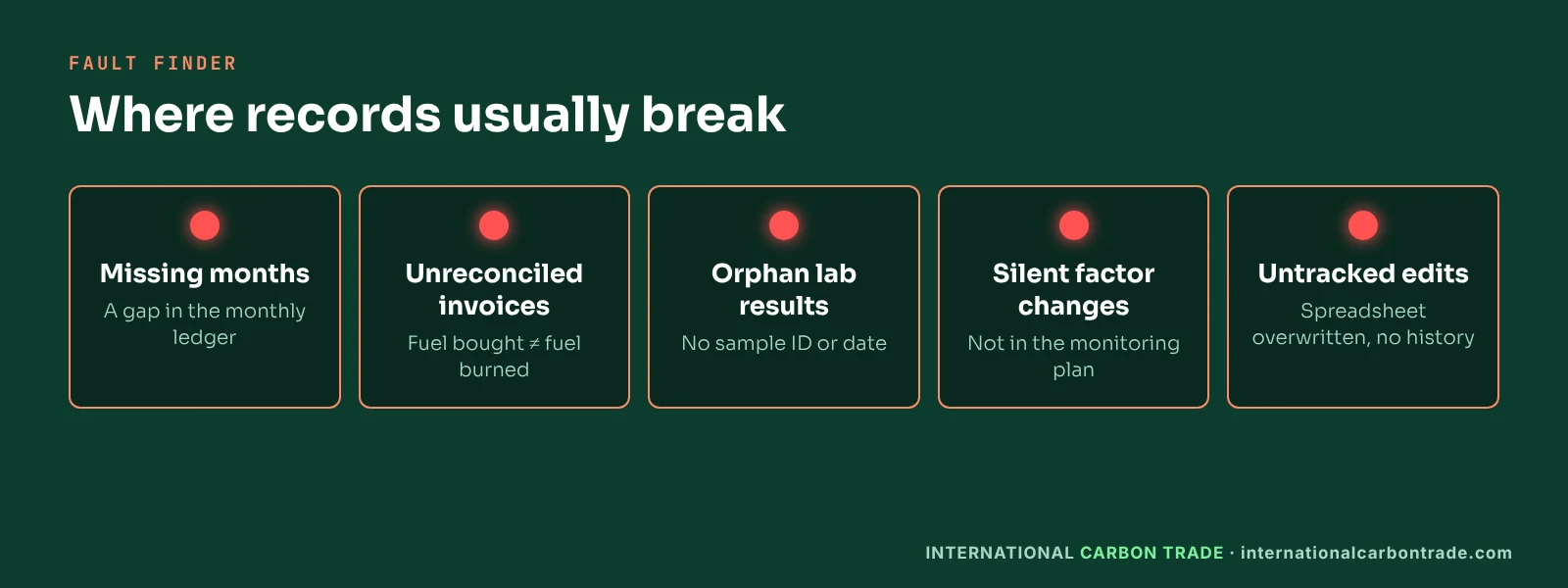
For refineries, the factor column adds one more number to defend. For offset projects, the same record must show the tonne hasn't been claimed elsewhere.
ICT's dMRV platform captures monthly fuel, power, production and lab data, keeps an audit trail of every change, and exports a verification evidence pack for your ACVA.
Free dMRV readiness score: send one month of fuel and production records to contact@internationalcarbontrade.com and we'll score how verification-ready they are.
Keep Reading
- Type I vs Type II Emission Factors: The CCTS Deadline in April 2027
- ACVA List India 2026: 18 Carbon Verifiers Under CCTS
- ACVA Verification Process Under CCTS: 7 Steps to a CCC
Our CCTS Services
International Carbon Trade (ICT) is an India-based CCTS marketplace and dMRV platform offering 18 end-to-end services, from BEE ICM Portal registration and ACVA verification to buying, selling and banking CCCs on India's power exchanges.
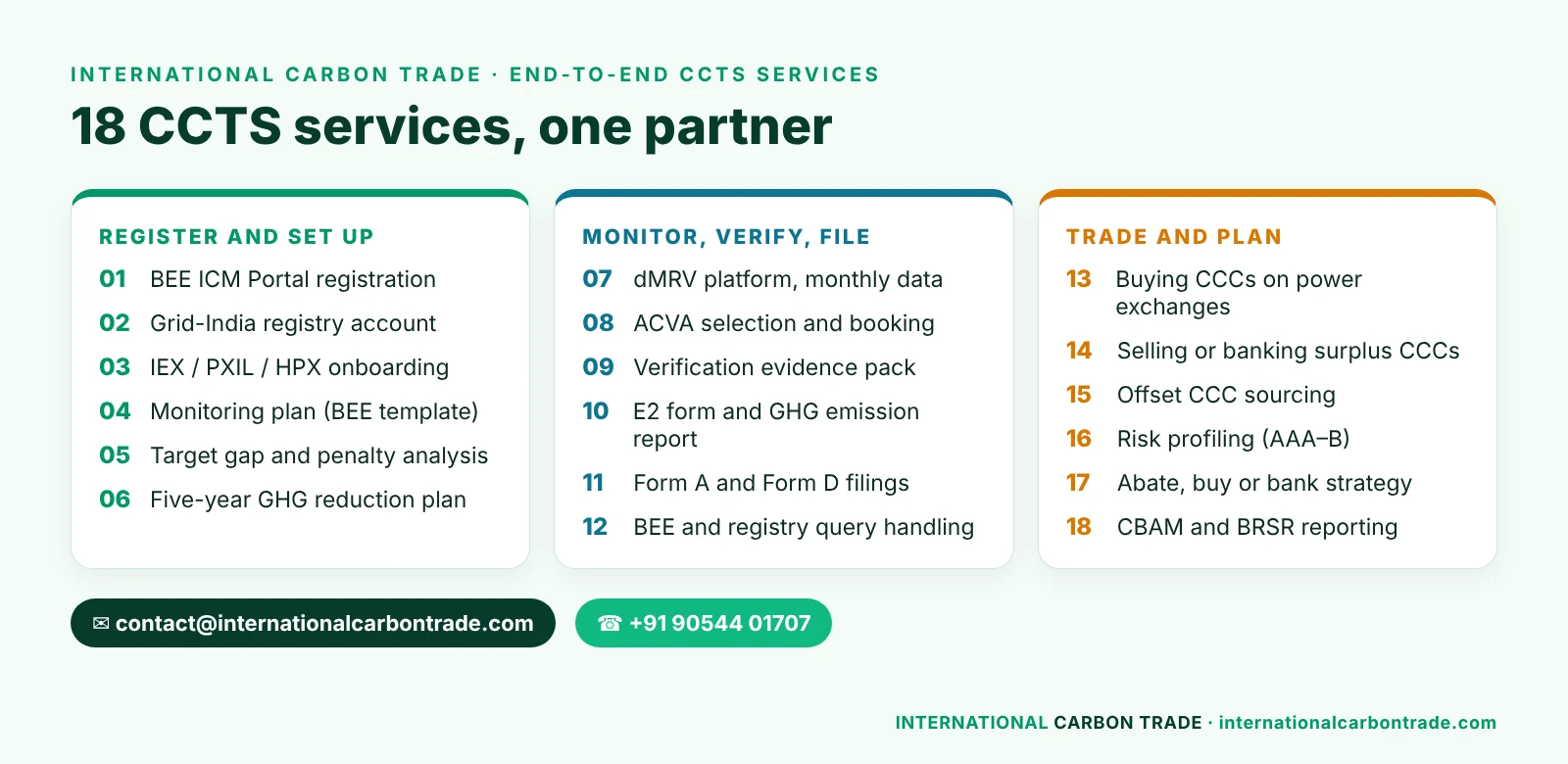
| Register and Set Up | Monitor, Verify, File | Trade and Plan |
|---|---|---|
| BEE ICM Portal registration | dMRV platform, monthly data | Buying CCCs on power exchanges |
| Grid-India registry account | ACVA selection and booking | Selling or banking surplus CCCs |
| IEX / PXIL / HPX onboarding | Verification evidence pack | Offset CCC sourcing |
| Monitoring plan (BEE template) | E2 form and GHG emission report | Risk profiling (AAA–B) |
| Target gap and penalty analysis | Form A and Form D filings | Abate, buy or bank strategy |
| Five-year GHG reduction plan | BEE and registry query handling | CBAM and BRSR reporting |
For any services related to CCTS, contact International Carbon Trade:
- Email: contact@internationalcarbontrade.com
- Phone: +91 90544 01707
- Website: internationalcarbontrade.com
- LinkedIn: Follow International Carbon Trade
Frequently Asked Questions
- What is dMRV under CCTS?
- Digital monitoring, reporting and verification: a system that records emissions data monthly and keeps an audit trail for verification.
- Is dMRV mandatory under CCTS?
- CCTS requires a BEE-approved monitoring plan, monthly monitoring and ACVA verification. A digital system is the practical way to meet those rules.
- When must the CCTS monitoring plan be submitted?
- BEE's procedure says within three months of the start of a compliance cycle.
- What does an ACVA check?
- That fuel, power and production records reconcile, lab results match samples and emission factors follow the monitoring plan.
- What happens if monitoring data is incomplete?
- Verification is delayed or qualified, and if documents are not filed, achieved intensity can be deemed equal to the baseline.
- How can ICT help with dMRV?
- International Carbon Trade's dMRV platform records monthly data with an audit trail and builds the evidence pack. Contact contact@internationalcarbontrade.com or +91 90544 01707.