UK CBAM Default Values 2027: What Indian Exporters Must Know
HMRC's draft UK CBAM default values and illustrative rates explained for Indian steel, aluminium and cement exporters, and why verified data matters.
The UK's carbon border charge (UK CBAM) starts on 1 January 2027. On 16 October 2026, HMRC published draft default emission values and illustrative rates. For Indian exporters of steel, aluminium and cement, these numbers decide what a UK importer pays if your plant's own emissions data isn't available.
Three things to know before your UK buyer files:
1. Defaults are one number for every country of origin.
2. A UK return filed on defaults cannot be amended later.
3. Verified plant data must exist before the importer files.
What Are the UK CBAM Illustrative Rates?
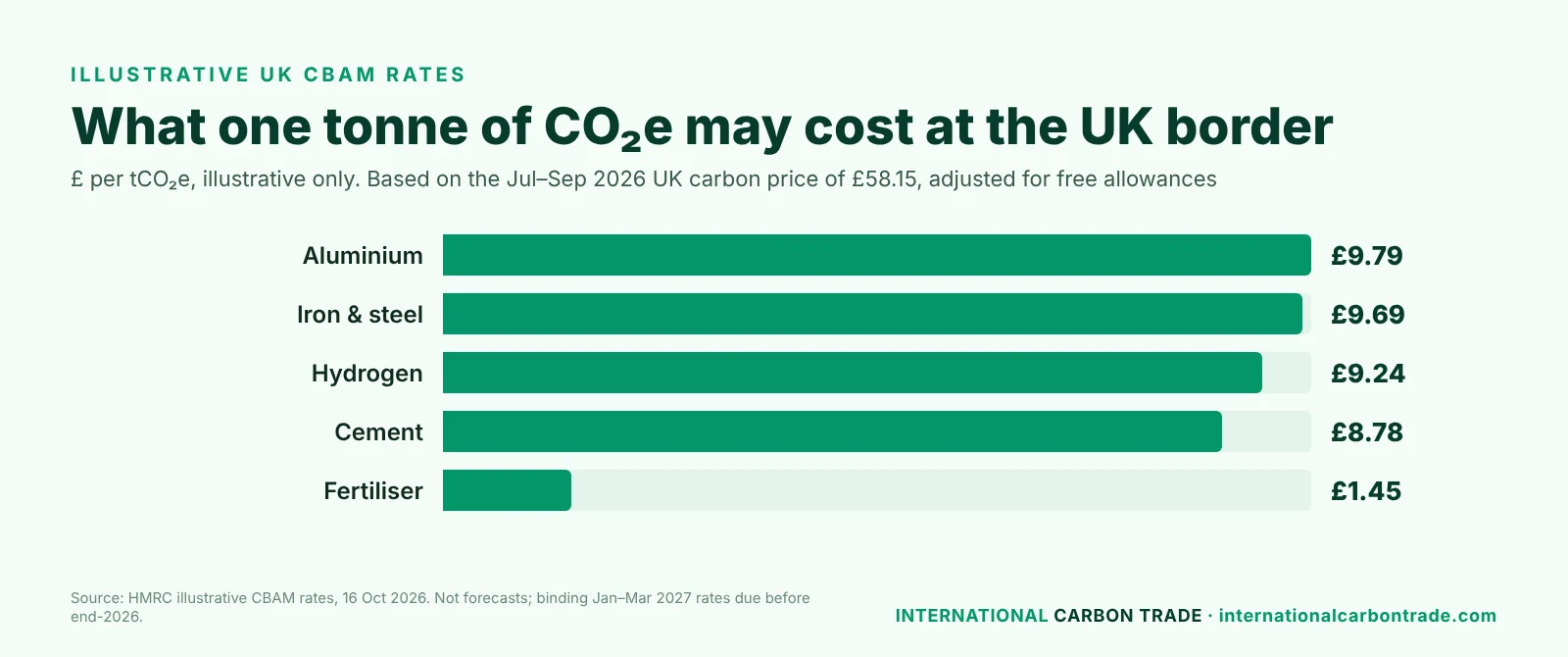
Each rate starts from the average UK carbon price for July–September 2026 (£58.15), reduced for free allowances UK producers still receive. HMRC says these are not forecasts and create no liability. Binding rates for January–March 2027 are due before the end of 2026. Compare this with the EU's Q3 2026 CBAM certificate price of €82.32.
How UK CBAM Default Values Work
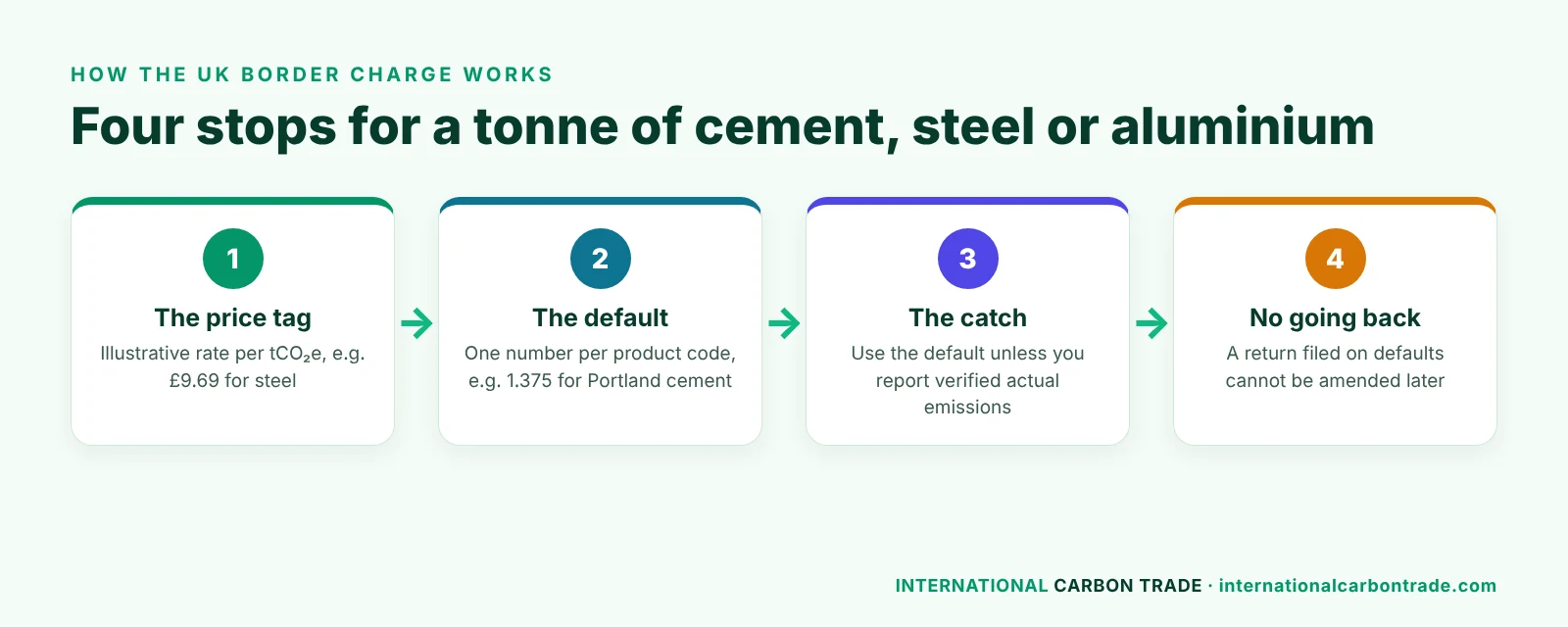
| Stop | What It Means for You |
|---|---|
| Price tag | Illustrative rate per tCO₂e, e.g. £9.69 for steel |
| Default | One figure per product code, e.g. 1.375 tCO₂e/t for Portland cement |
| Catch | Importers must use the default unless they report verified actual emissions |
| No going back | A return filed on defaults cannot be reopened with actual data |
Secondary sources report a 10% mark-up on defaults for 2027–28 (not fertilisers); official pages don't yet confirm it, as of 22 October 2026.
What Is 0.1 tCO₂e Worth?
At illustrative rates, every 0.1 tCO₂e per tonne of product is worth about £0.97 for steel, £0.98 for aluminium, £0.88 for cement and £0.15 for fertiliser (ICT arithmetic). Whether your plant sits above or below the default is the whole question.
Default vs Verified Emissions
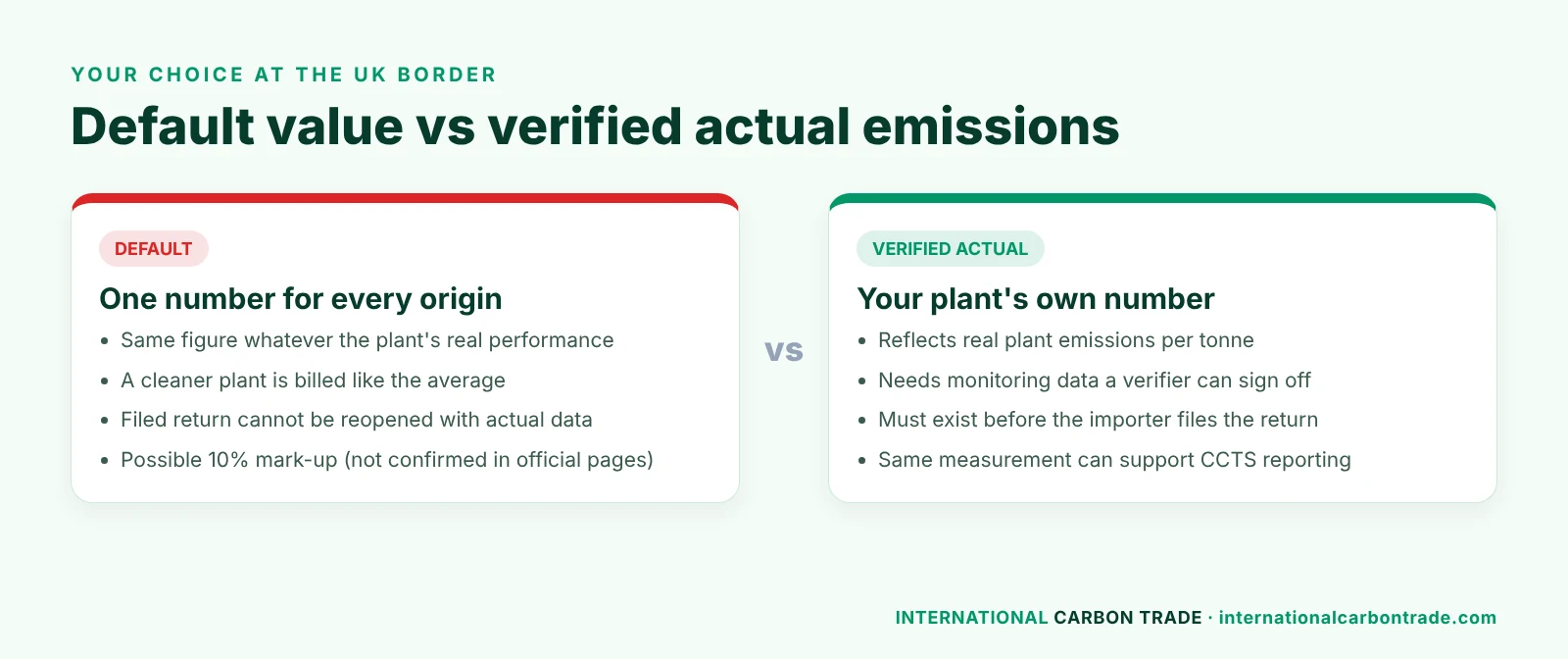
A default treats a clean plant like the average one. CCTS and UK CBAM don't ask for exactly the same number, but the monitoring behind both can be built once.
Try it: check your exposure with Carbon Risk Profiling or estimate emissions with our Emission Calculator.
What We Could Not Confirm
As of 22 October 2026: the binding Q1 2027 rates, whether defaults include the mark-up, which verifiers the UK will accept for Indian plants, and whether CCTS verification will count.
How International Carbon Trade Helps
ICT does not file UK returns. We help plants build verification-ready monitoring data through our dMRV platform, so a verified figure exists before your UK importer files.
Free default vs actual check: email your product code and plant data to contact@internationalcarbontrade.com.
Keep Reading
- UK Recognises India's CCTS for CBAM Relief: What It Means
- CBAM Certificate Price Q3 2026 Explained for Indian Exporters
- CBAM Carbon Tax Deduction: Can CCTS Cut Your EU CBAM Bill?
Our CCTS Services
International Carbon Trade (ICT) is an India-based CCTS marketplace and dMRV platform offering 18 end-to-end services, from BEE ICM Portal registration and ACVA verification to buying, selling and banking CCCs on India's power exchanges.
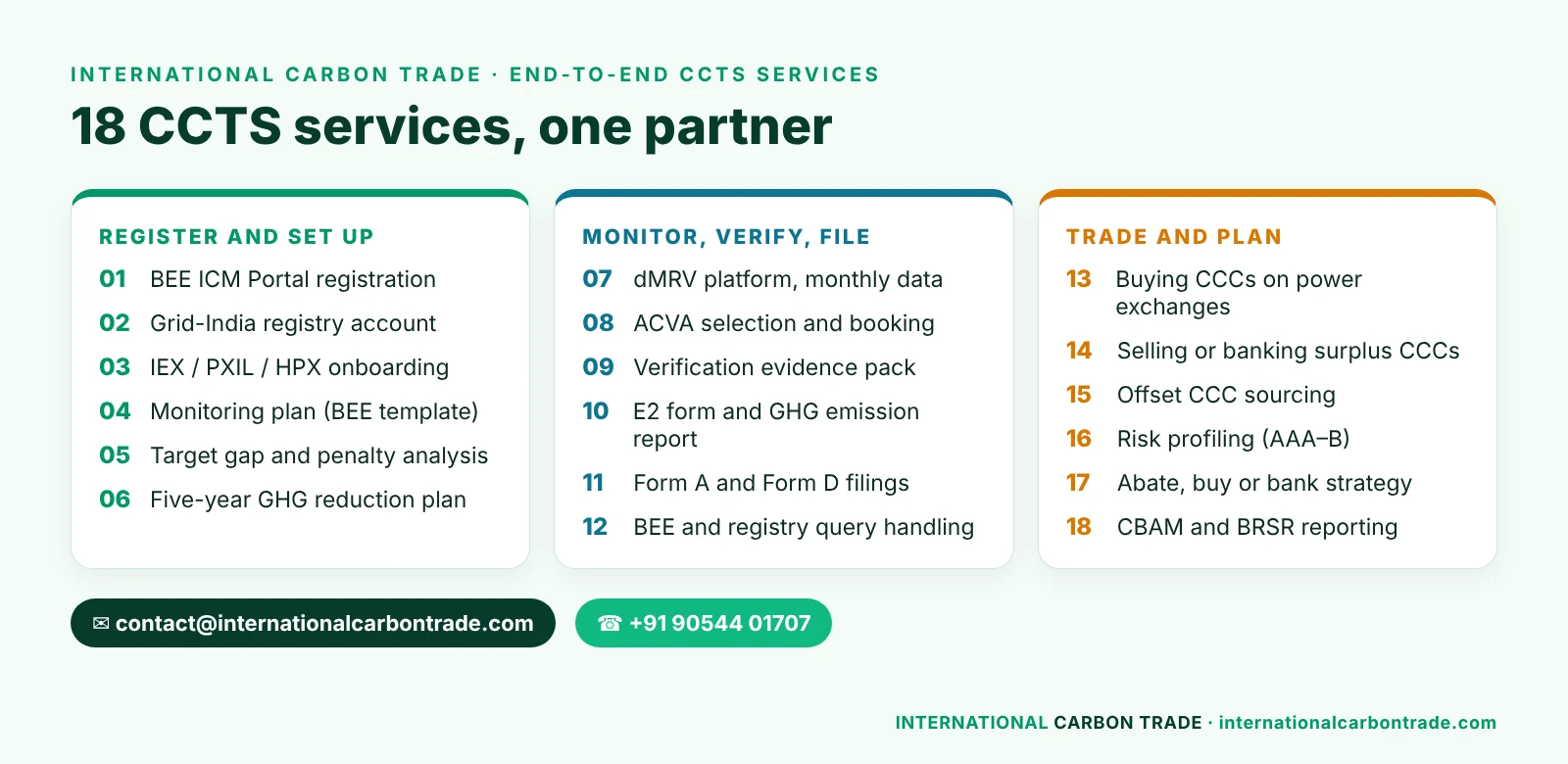
| Register and Set Up | Monitor, Verify, File | Trade and Plan |
|---|---|---|
| BEE ICM Portal registration | dMRV platform, monthly data | Buying CCCs on power exchanges |
| Grid-India registry account | ACVA selection and booking | Selling or banking surplus CCCs |
| IEX / PXIL / HPX onboarding | Verification evidence pack | Offset CCC sourcing |
| Monitoring plan (BEE template) | E2 form and GHG emission report | Risk profiling (AAA–B) |
| Target gap and penalty analysis | Form A and Form D filings | Abate, buy or bank strategy |
| Five-year GHG reduction plan | BEE and registry query handling | CBAM and BRSR reporting |
For any services related to CCTS, contact International Carbon Trade:
- Email: contact@internationalcarbontrade.com
- Phone: +91 90544 01707
- Website: internationalcarbontrade.com
- LinkedIn: Follow International Carbon Trade
Frequently Asked Questions
- When does UK CBAM start?
- The UK carbon border adjustment mechanism starts on 1 January 2027, covering sectors including iron and steel, aluminium, cement, fertiliser and hydrogen.
- What is the UK CBAM default value for Portland cement?
- HMRC's draft default for Portland cement (not white) is 1.375 tCO2e per tonne of product, published on 16 October 2026. Draft values may change.
- Are the UK CBAM illustrative rates final?
- No. HMRC says they are illustrative, not forecasts, and create no liability. Binding rates for January to March 2027 are due before the end of 2026.
- Can a UK CBAM return filed on defaults be amended later?
- No. A return that uses default values cannot later be amended with actual emissions data, so verified data must be ready before filing.
- Does CCTS verification count for UK CBAM?
- As of 22 October 2026 this is not confirmed. CCTS and UK CBAM measure different boundaries, but the same plant monitoring can support both.
- How can ICT help Indian exporters with UK CBAM?
- International Carbon Trade helps plants build verification-ready emissions data through its dMRV platform. Contact contact@internationalcarbontrade.com or +91 90544 01707.