Type I vs Type II Emission Factors: The CCTS Deadline in April 2027
CCTS allows default Type I emission factors only in the first trajectory period. What changes with Type II from April 2027, and how to prepare.
Most CCTS plants today calculate their emissions with default emission factors. BEE's rules say that convenience is temporary.
What Are Type I and Type II Emission Factors?
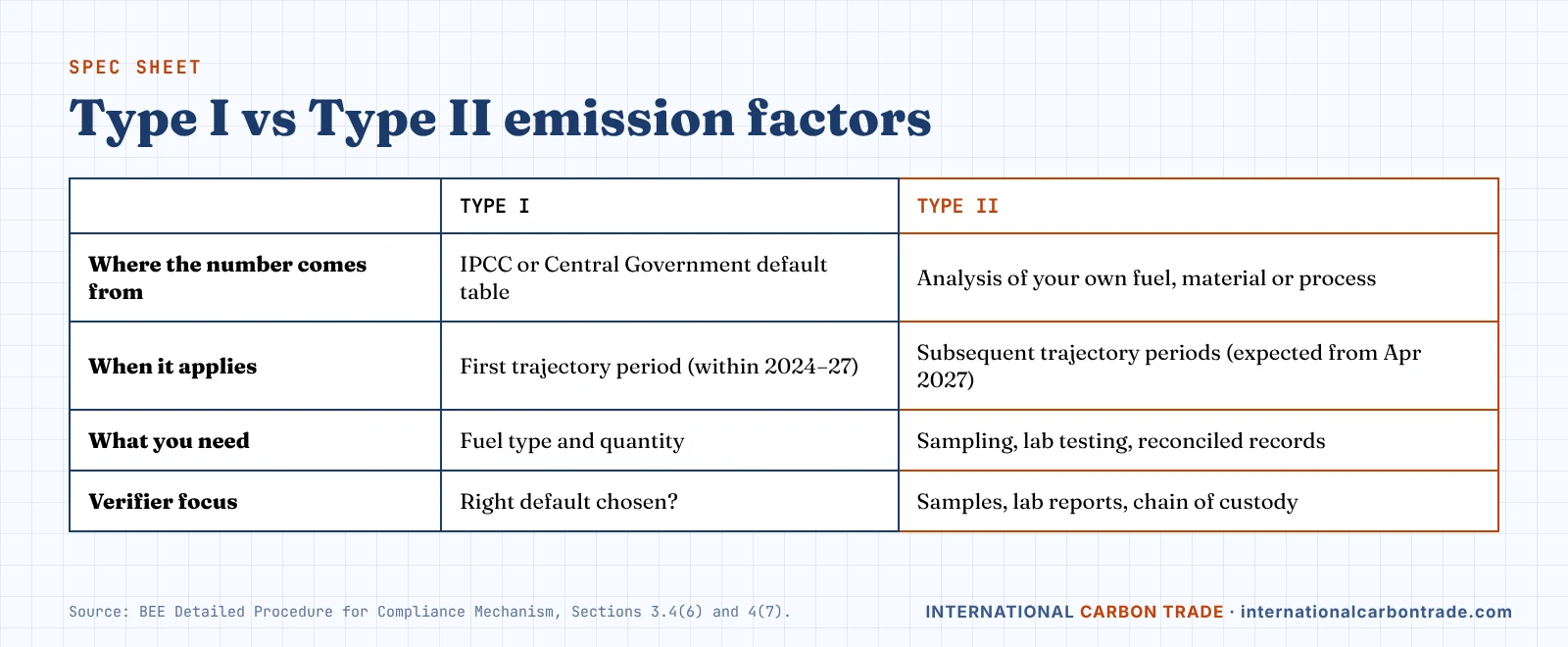
| | Type I | Type II |
|---|---|---|
| Source | IPCC or Central Government defaults | Your own fuel, material or process analysis |
| When | First trajectory period | Subsequent trajectory periods |
| Effort | Look-up table | Sampling plus lab testing |
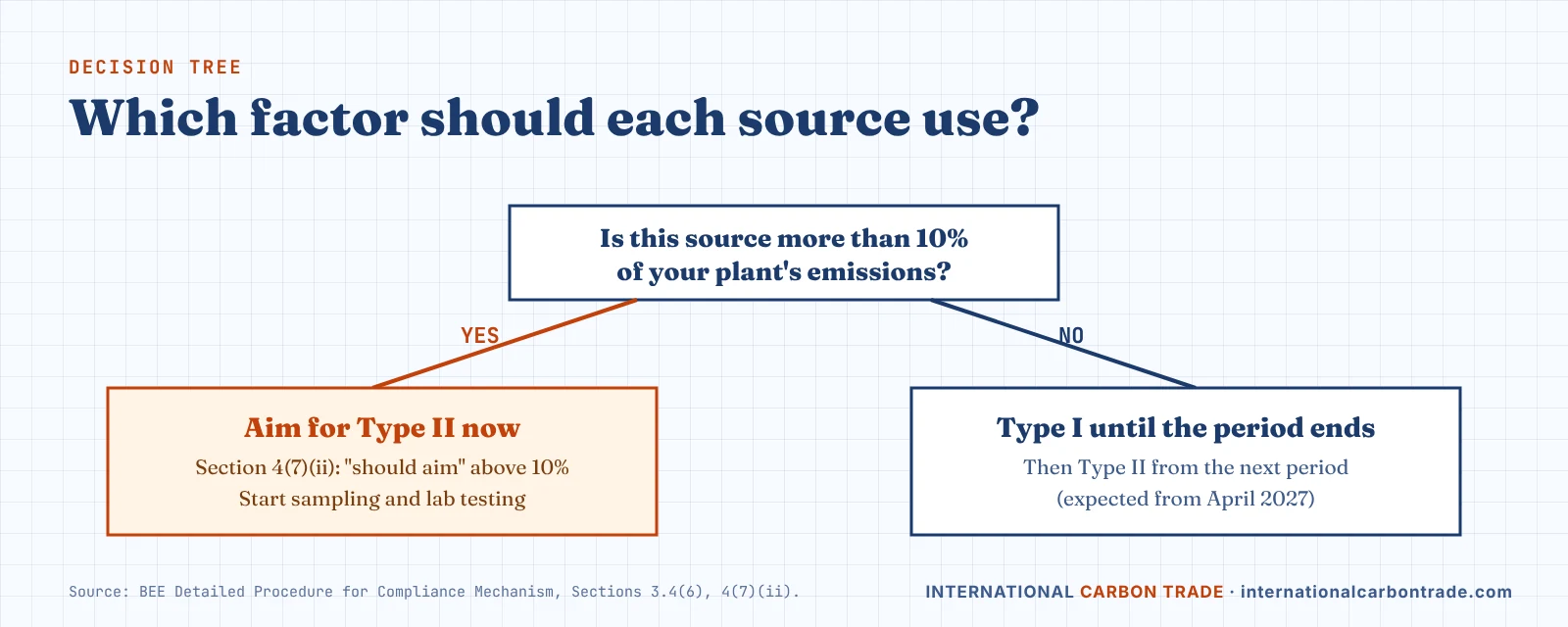
BEE's Detailed Procedure for Compliance Mechanism says Type I defaults "will be applied for the first trajectory period" (Section 3.4(6)). The procedure's own note places that period within 2024–27, so plant-specific Type II factors are expected from April 2027 (FY2027-28).
Three Rules Most Plants Miss
1. The 10% rule applies now. Section 4(7)(ii) says plants should aim for Type II for any source above 10% of overall emissions.
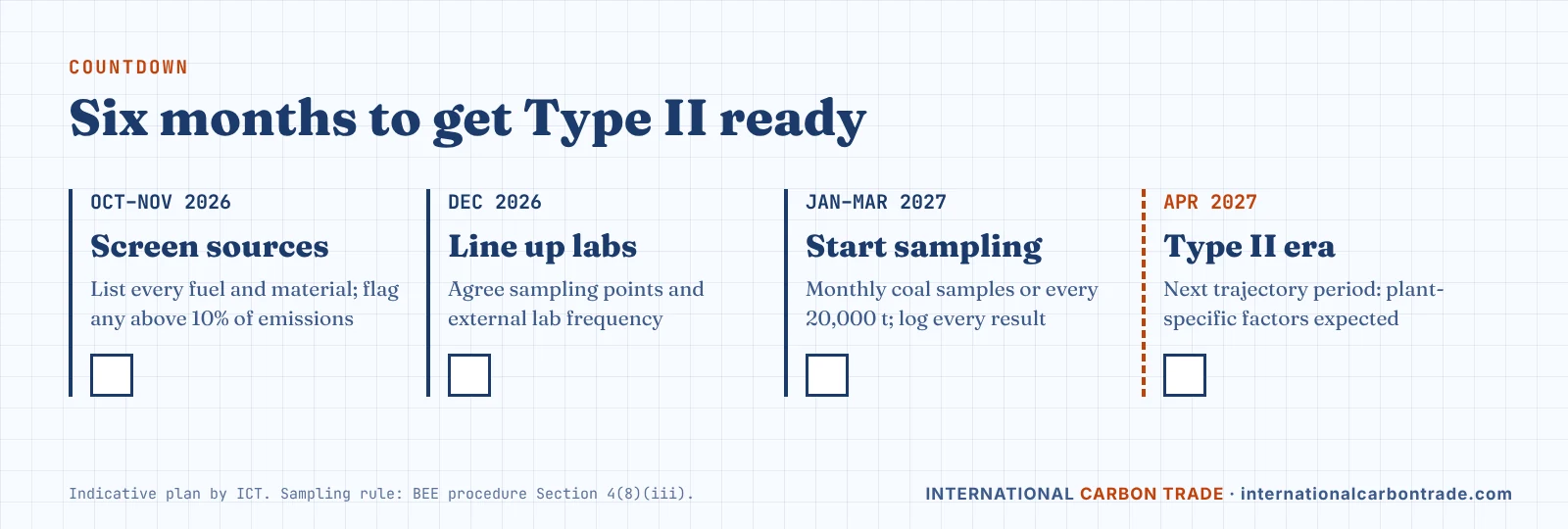
2. Sampling has a rhythm. Coal samples come from the auto-sampler at least once a month or every 20,000 tonnes (Section 4(8)(iii)).
3. Consistency. The same factor basis must apply in the baseline and assessment years, so a sampled data history matters.
The Countdown to April 2027
Lab results that arrive late or don't reconcile with fuel purchase records are what an ACVA will question first. See what verification-ready dMRV data looks like. Accurate factors can also raise or lower the CCCs you earn, and they help CBAM reporting.
ICT helps plants move to Type II without surprises: our dMRV platform logs every sample and lab result monthly and links it to the verification evidence pack.
Free Type II readiness check: send us your fuel mix and we'll flag which sources cross the 10% line. Email contact@internationalcarbontrade.com.
Keep Reading
- Navigating India's CCTS 2026: Guidance for Obligated Entities
- ACVA List India 2026: 18 Carbon Verifiers Under CCTS
- Carbon Credit Certificate (CCC) in India: Complete CCTS Guide
Our CCTS Services
International Carbon Trade (ICT) is an India-based CCTS marketplace and dMRV platform offering 18 end-to-end services, from BEE ICM Portal registration and ACVA verification to buying, selling and banking CCCs on India's power exchanges.
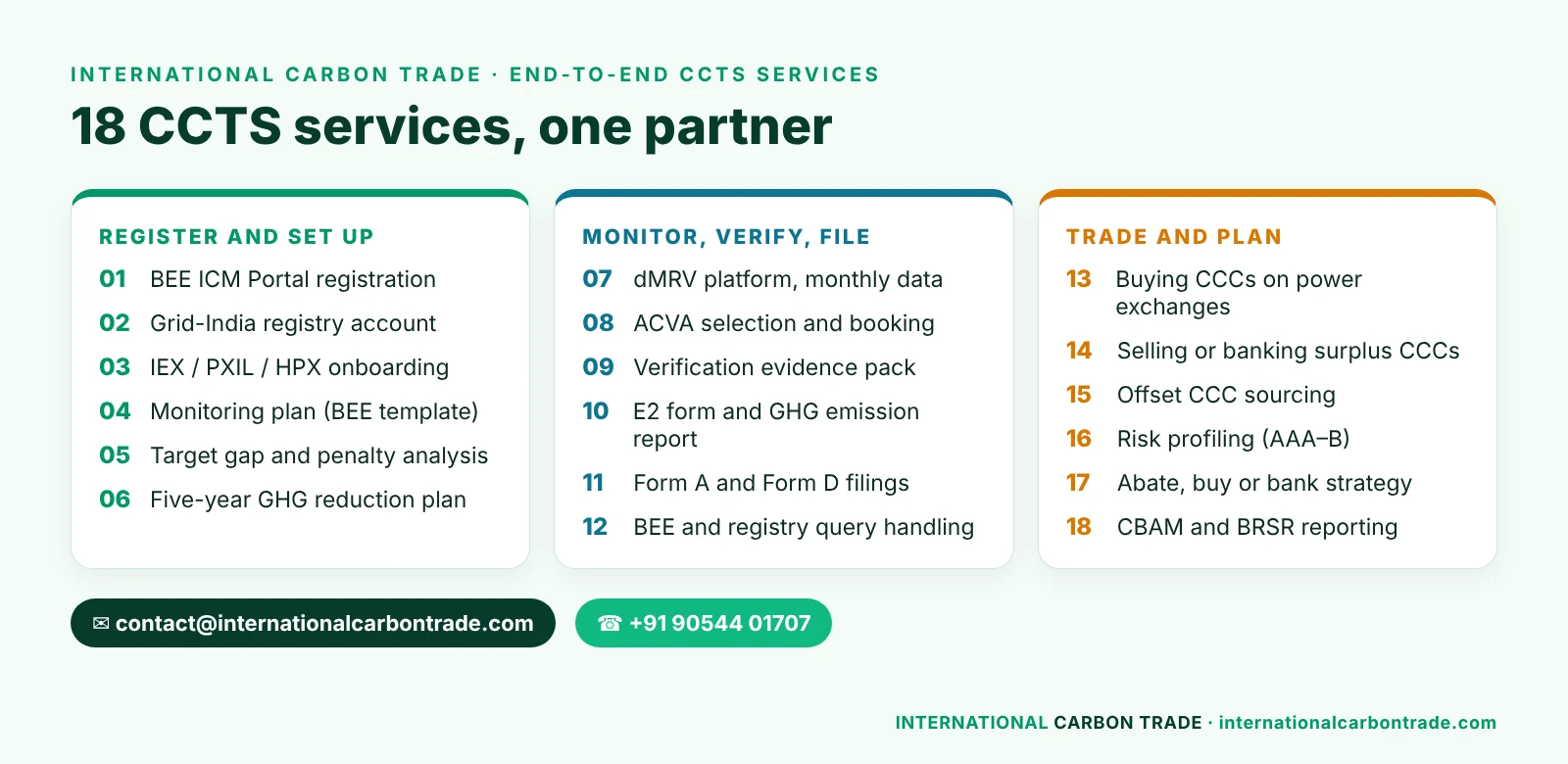
| Register and Set Up | Monitor, Verify, File | Trade and Plan |
|---|---|---|
| BEE ICM Portal registration | dMRV platform, monthly data | Buying CCCs on power exchanges |
| Grid-India registry account | ACVA selection and booking | Selling or banking surplus CCCs |
| IEX / PXIL / HPX onboarding | Verification evidence pack | Offset CCC sourcing |
| Monitoring plan (BEE template) | E2 form and GHG emission report | Risk profiling (AAA–B) |
| Target gap and penalty analysis | Form A and Form D filings | Abate, buy or bank strategy |
| Five-year GHG reduction plan | BEE and registry query handling | CBAM and BRSR reporting |
For any services related to CCTS, contact International Carbon Trade:
- Email: contact@internationalcarbontrade.com
- Phone: +91 90544 01707
- Website: internationalcarbontrade.com
- LinkedIn: Follow International Carbon Trade
Frequently Asked Questions
- What is a Type I emission factor under CCTS?
- A default factor published by the IPCC or the Central Government, chosen by fuel or material type.
- What is a Type II emission factor?
- A plant-specific factor based on analysis of your own fuel, material or process, supported by sampling and lab testing.
- When do Type II emission factors become mandatory?
- BEE's procedure applies Type I for the first trajectory period, placed within 2024-27, so Type II is expected from April 2027.
- What is the 10% rule for emission factors?
- Plants should aim to use Type II factors for any source that is more than 10% of their overall emissions.
- How often must coal be sampled?
- BEE's procedure says coal samples are taken at least once a month or at every 20,000 tonnes.
- How can ICT help with Type II emission factors?
- International Carbon Trade's dMRV platform records sampling and lab data for verification. Contact contact@internationalcarbontrade.com or +91 90544 01707.