Green Hydrogen Standards in India and CCTS
India's 2 kg CO2e green hydrogen threshold, SECI green ammonia auctions, and where clean hydrogen meets CCTS offsets and CBAM.
Green hydrogen sits at the centre of India's plan to decarbonise heavy industry. The National Green Hydrogen Mission (NGHM) targets 5 million tonnes a year by 2030, and MNRE's Green Hydrogen Standard for India decides what counts as green, which matters for exports facing EU CBAM.
The 2 kg Line
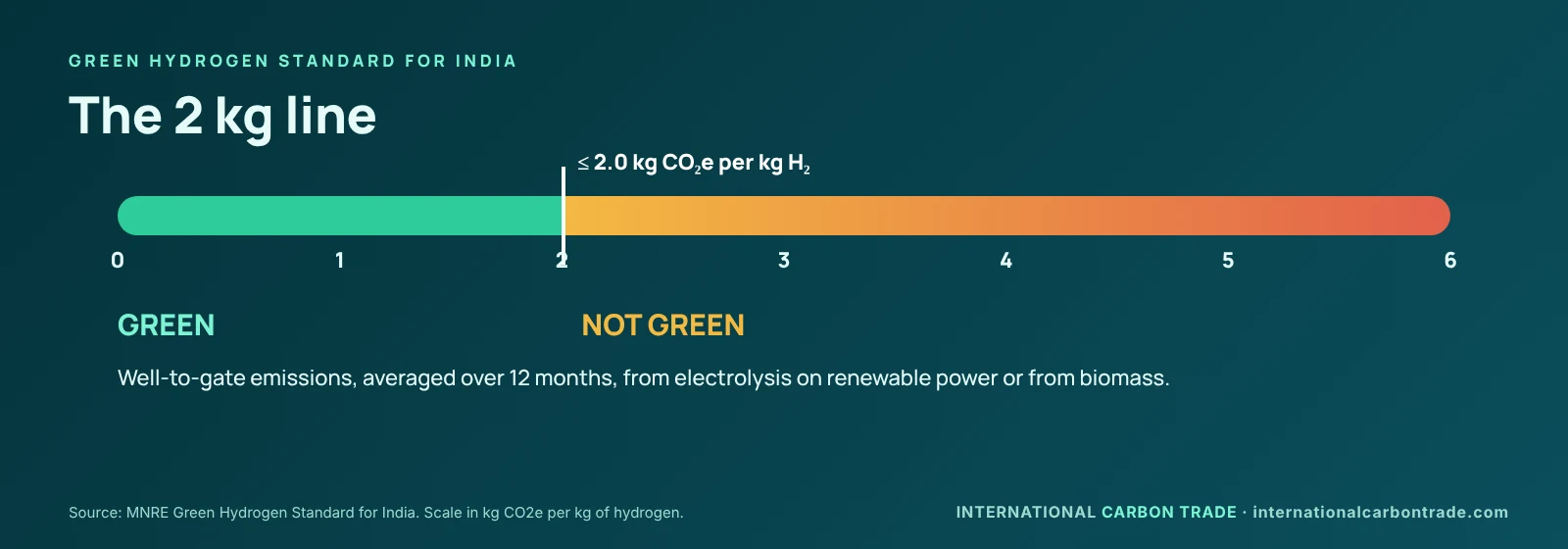
Hydrogen qualifies as green only when:
- Well-to-gate emissions do not exceed 2.0 kg CO₂e per kg of H₂, averaged over 12 months.
- Electricity for electrolysis comes from renewable sources, including green power wheeled under open access.
- Pathways: water electrolysis and biomass gasification are both recognised, subject to emission and feedstock audits.
Demand Is Being Built
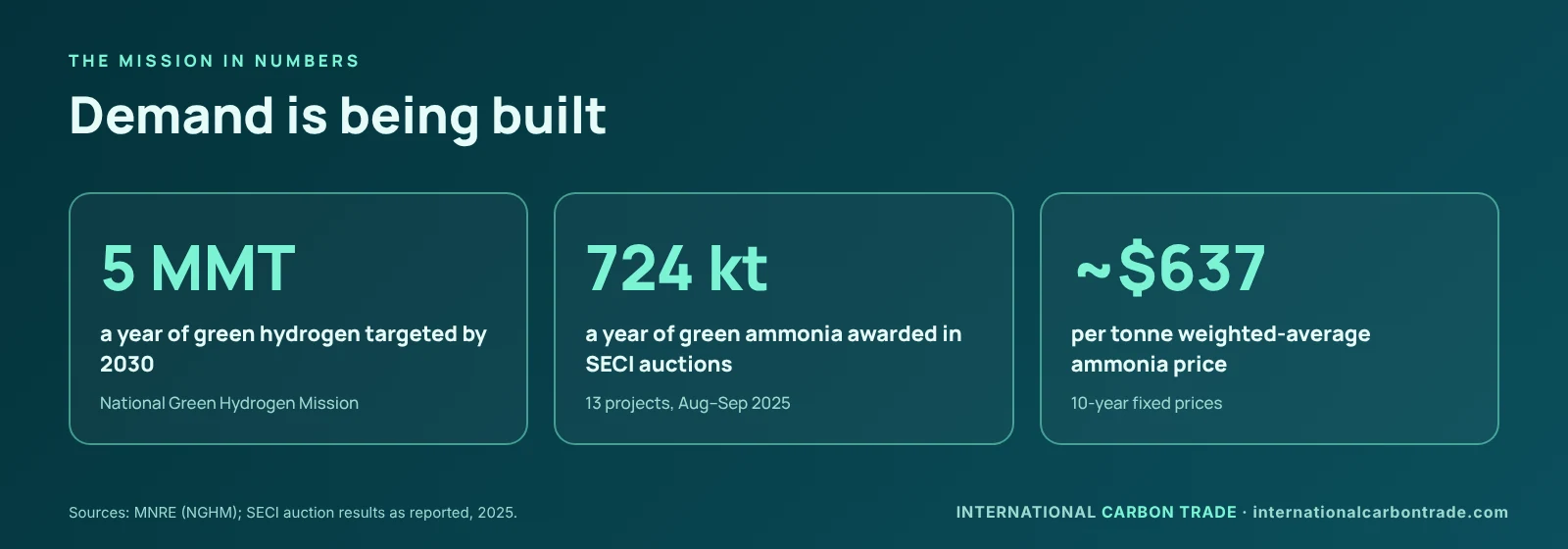
SECI auctions in August–September 2025 awarded 13 projects for 724,000 tonnes a year of green ammonia at a weighted average near $637 a tonne. Fertiliser still has no CCTS targets: see delays and green ammonia.
Where It Meets CCTS
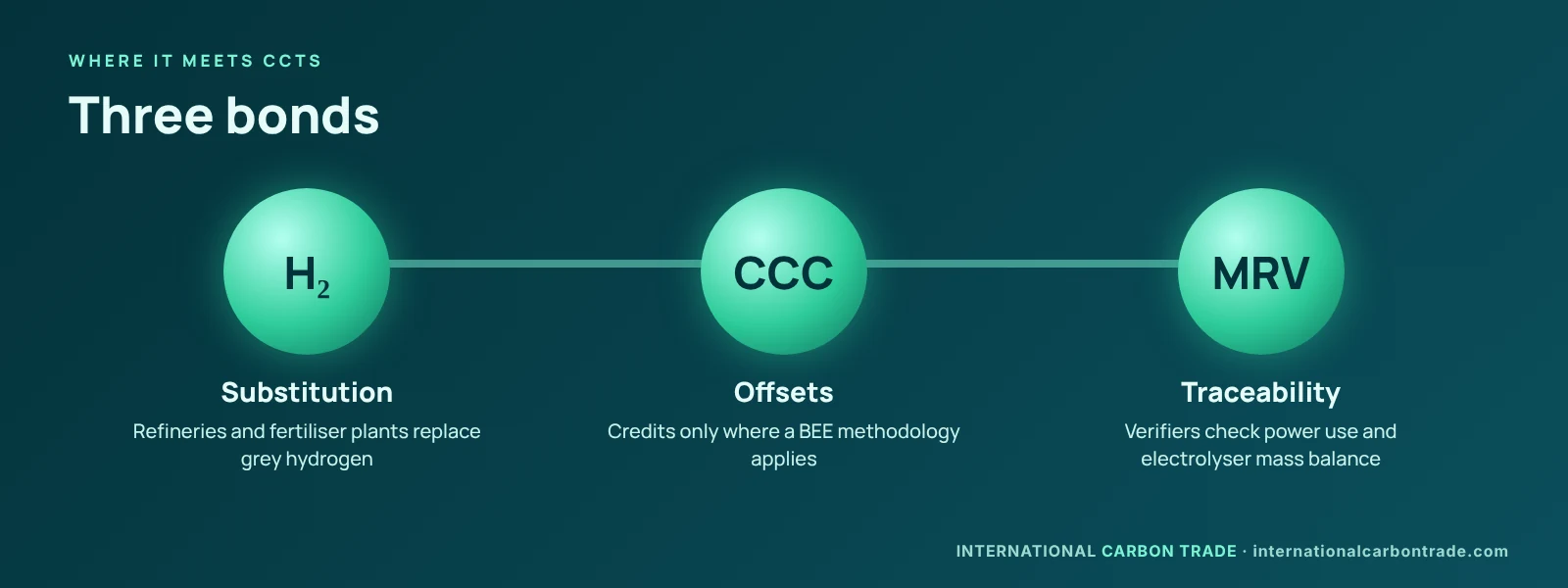
1. Substitution: refineries and fertiliser plants, the biggest users of grey hydrogen, are natural first buyers. Refineries already carry CCTS intensity targets.
2. Offsets: where an approved BEE methodology applies, displacing fossil fuel can earn CCCs, traded only on India's power exchanges. Check that the same tonne isn't claimed twice.
3. Traceability: accredited verifiers check power use and electrolyser mass balance.
ICT supports green hydrogen developers and buyers with dMRV monitoring, offset registration support and CCC trading, plus CBAM reporting for exporters.
Free offset eligibility check: email your hydrogen or ammonia project details to contact@internationalcarbontrade.com, and we'll tell you if a BEE methodology could apply.
Keep Reading
- Carbon Credit Certificate (CCC) in India: Complete CCTS Guide
- CCTS Delays and Fertiliser: Trimmed Targets and Green Ammonia
- Carbon Marketplace vs Power Exchange: Who Executes CCC Trades?
Our CCTS Services
International Carbon Trade (ICT) is an India-based CCTS marketplace and dMRV platform offering 18 end-to-end services, from BEE ICM Portal registration and ACVA verification to buying, selling and banking CCCs on India's power exchanges.
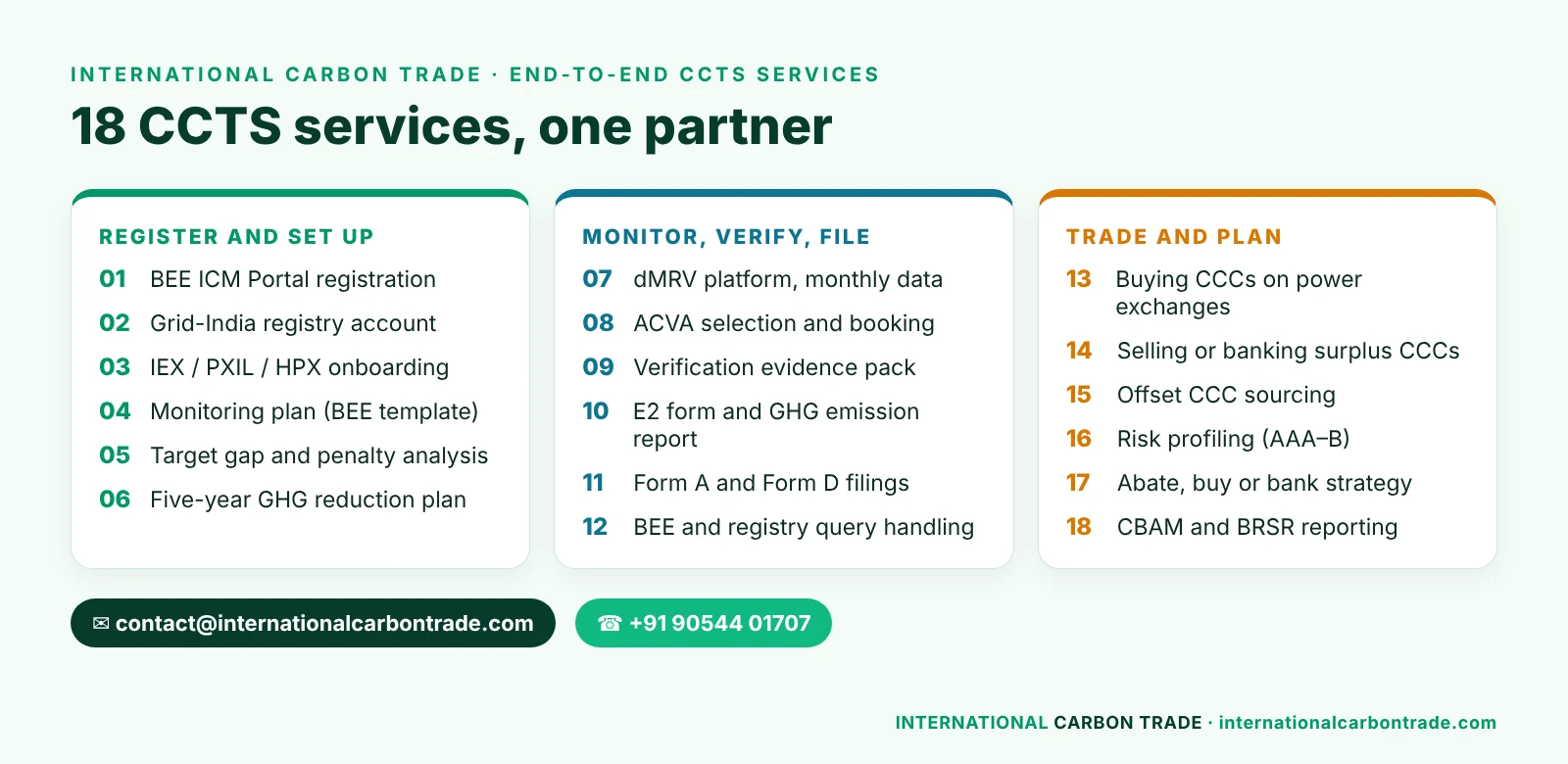
| Register and Set Up | Monitor, Verify, File | Trade and Plan |
|---|---|---|
| BEE ICM Portal registration | dMRV platform, monthly data | Buying CCCs on power exchanges |
| Grid-India registry account | ACVA selection and booking | Selling or banking surplus CCCs |
| IEX / PXIL / HPX onboarding | Verification evidence pack | Offset CCC sourcing |
| Monitoring plan (BEE template) | E2 form and GHG emission report | Risk profiling (AAA–B) |
| Target gap and penalty analysis | Form A and Form D filings | Abate, buy or bank strategy |
| Five-year GHG reduction plan | BEE and registry query handling | CBAM and BRSR reporting |
For any services related to CCTS, contact International Carbon Trade:
- Email: contact@internationalcarbontrade.com
- Phone: +91 90544 01707
- Website: internationalcarbontrade.com
- LinkedIn: Follow International Carbon Trade
Frequently Asked Questions
- What is the Green Hydrogen Standard for India?
- Hydrogen qualifies as green when well-to-gate emissions do not exceed 2.0 kg CO2e per kg of hydrogen, averaged over 12 months, using renewable energy.
- What is India's green hydrogen production target?
- The National Green Hydrogen Mission targets 5 million tonnes of green hydrogen production a year by 2030.
- Can green hydrogen projects earn Carbon Credit Certificates?
- They can where an approved BEE offset methodology applies. Issued CCCs are traded on India's power exchanges.
- Is hydrogen covered by EU CBAM?
- Yes. Hydrogen is one of the sectors covered by EU CBAM, so exporters need verified emissions data.
- How can ICT help green hydrogen developers?
- International Carbon Trade supports dMRV monitoring, offset registration and CCC trading. Contact contact@internationalcarbontrade.com or +91 90544 01707.